
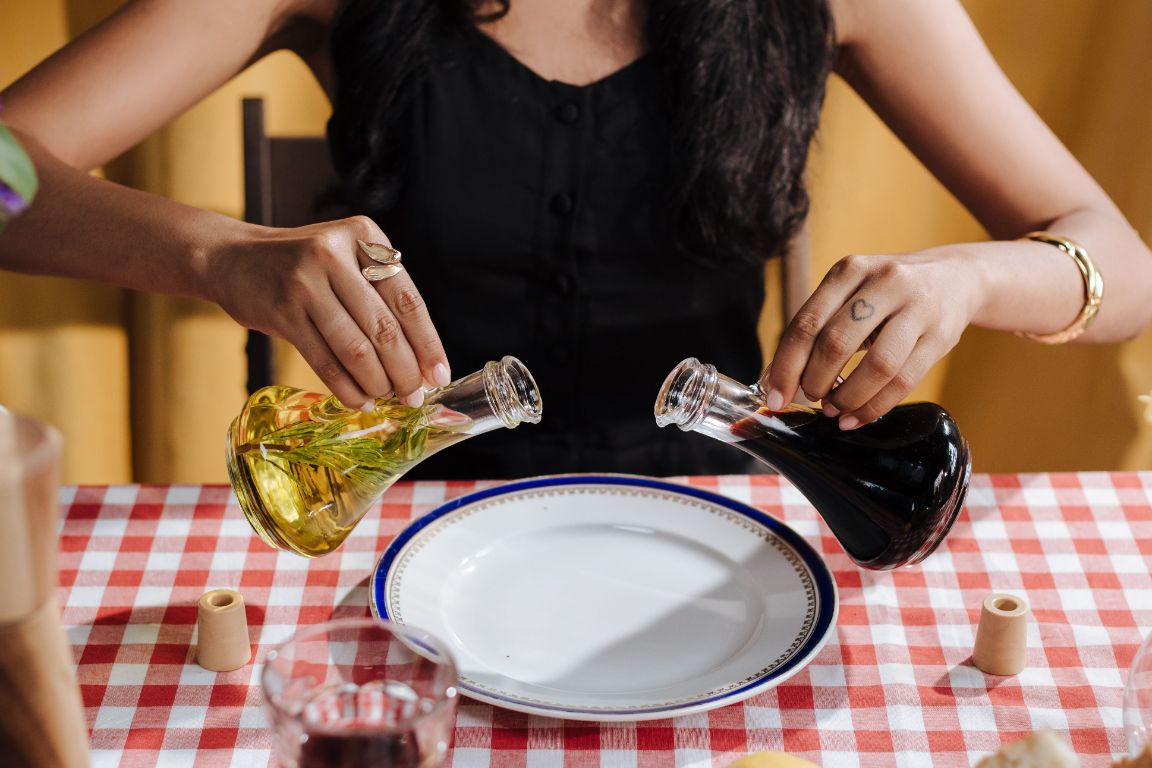
Balsamic vinegar does not really go bad. Its high acidity prevents bacterial growth, which means it is self-preserving almost indefinitely. What happens over time is quality loss, the flavour mellows and the colour can fade but it won’t make you sick.
Here is the full picture for balsamic, soy sauce, worcestershire, hummus, and other condiments people commonly wonder about.
Does balsamic vinegar go bad?
No, not in any meaningful safety sense. Vinegar is acidic enough that bacteria cannot survive in it. An opened bottle of balsamic vinegar is safe to use years after opening.
What does change:
- Flavour: over 3 to 5 years after opening, the taste gradually mellows and becomes less complex. It won’t taste bad, just less vibrant.
- Colour: some fading or darkening over time is normal.
- Sediment: natural deposits can form at the bottom of the bottle. This is harmless, just shake or strain if it bothers you.
Does balsamic vinegar need to be refrigerated? No. A cool, dark cupboard is ideal. The fridge works fine too but adds no meaningful preservation benefit.
Does soy sauce go bad?
Soy sauce has an extremely long shelf life because it is high in salt and produced through fermentation, two things that naturally prevent spoilage.
- Opened: best quality within 1 to 3 years in the fridge. Still safe to use after that, though the flavour gradually fades.
- Unopened: several years in the pantry.
The most common question is whether to refrigerate soy sauce after opening. Refrigerating it preserves quality longer, especially for premium varieties. For everyday soy sauce used frequently, keeping it in the pantry is fine.
Does Worcestershire sauce go bad?
Similar story to soy sauce, high salt and vinegar content means it lasts a very long time.
- Opened: best within 1 to 3 years. Keeps indefinitely in terms of safety.
- Refrigeration: not strictly required, but recommended for best quality.
Signs it has gone off: unusual sediment, a significant change in smell, or visible mould (rare but possible if water has been introduced into the bottle).
Does hummus go bad?
Yes, hummus is one of the exceptions to the “condiments last forever” rule. It is dairy-adjacent (contains tahini and oil) and perishable.
- Store-bought opened: 4 to 7 days in the fridge. Check the label, some brands state shorter windows.
- Homemade: 3 to 5 days in the fridge.
- Unopened: use-by date on the packaging.
Does hummus need to be refrigerated? Always. Even store-bought hummus that has been shelf-stable in transport needs refrigeration once opened. Don’t leave hummus out for more than 2 hours.
Signs hummus has gone bad: sour smell, liquid separation beyond normal, mould (usually appears around the edges first), or unusual discolouration.
Does orange juice go bad?
- Store-bought opened: 7 to 10 days in the fridge.
- Fresh squeezed: 2 to 3 days in the fridge.
- Unopened carton: use-by date.
Signs it has gone off: fizzing or bubbling (fermentation has begun), sour or unpleasant smell beyond normal OJ tartness, or mould.
Does evaporated milk go bad?
- Unopened: up to 1 year in the pantry (check the date).
- Opened: 3 to 4 days in the fridge in a covered non-metal container.
Important: do not store opened evaporated milk in the tin. Transfer it to a glass or plastic container, the metal can affect the taste and the seal isn’t tight enough once punctured.
Quick reference: condiment shelf life
| Condiment | Opened fridge life | Needs refrigeration? |
|---|---|---|
| Balsamic vinegar | 3 to 5 years (quality) | No |
| Soy sauce | 1 to 3 years | Recommended |
| Worcestershire sauce | 1 to 3 years | Recommended |
| Ketchup | 6 months to 1 year | Yes |
| Hot sauce | 6 months to 1 year | Recommended |
| Mustard | 1 year | Recommended |
| Mayonnaise | 2 months | Yes, always |
| Hummus | 4 to 7 days | Yes, always |
| Opened salsa | 1 to 4 weeks | Yes |
| Fish sauce | 3 to 4 years | Recommended |
| Pasta sauce (jar) | 5 to 10 days | Yes |
Frequently asked questions
How do you know if balsamic vinegar has gone bad? Look for mould (very rare but possible if contaminated with water or food), or a dramatically off smell. Otherwise, age just means reduced quality, not spoilage.
Can old balsamic vinegar make you sick? Extremely unlikely. The acidity of vinegar is hostile to bacteria. Degraded quality is the realistic concern, not food safety.
Does soy sauce need to go in the fridge? Not strictly required, but refrigerating after opening keeps the flavour better for longer. Up to you, if you use it frequently, the pantry is fine.
For storage times on fresh foods and proteins, see our complete fridge food storage guide.
Storage times based on USDA FoodKeeper and FDA guidelines.

 How Long Does Salmon Last in the Fridge?
Leave a Reply