
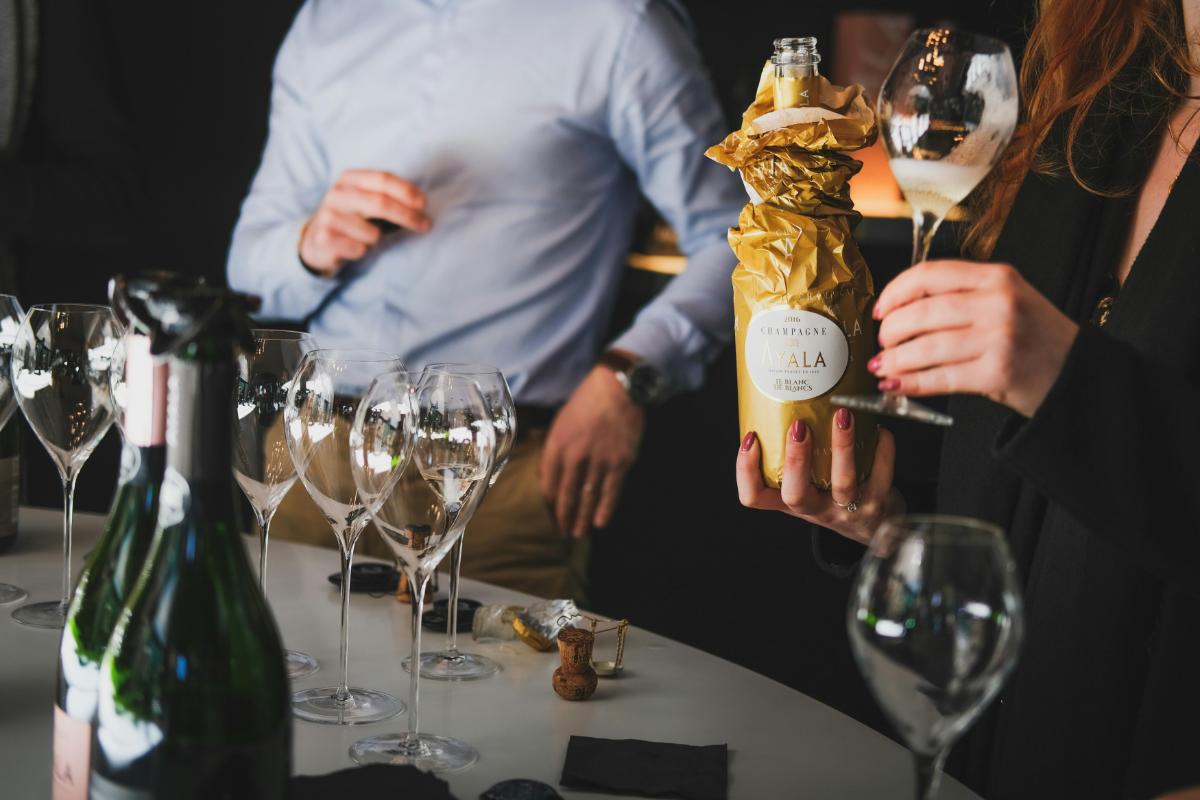
Unopened Champagne does not have one universal expiration date. A bottle is already ready to drink when the producer releases it, but it can continue to develop for years if stored under suitable conditions.
How long it remains at its best depends on the producer, whether it is non-vintage or vintage, the cuvée, bottle size, and—most importantly—how it has been stored.
Quick answer: Many non-vintage Champagnes are best enjoyed within a few years of purchase, while vintage Champagne may develop for substantially longer. Do not treat those ranges as expiration dates. Check the producer’s guidance when you have a valuable or age-worthy bottle.
How Long Does Unopened Champagne Last?
Champagne is different from a perishable food with a fixed safety deadline. An unopened bottle does not suddenly become unsafe because it passes a particular number of years.
Instead, the wine gradually changes. With age, it may become:
- Darker in color
- Less intensely sparkling
- Less dominated by fresh fruit aromas
- More developed in flavor
- More likely to show toast, brioche, dried-fruit, nutty, or other mature characteristics
Whether those changes are desirable depends on the Champagne and your taste.
Champagne Shelf Life at a Glance
| Champagne Type | Practical Approach After Purchase |
|---|---|
| Non-vintage Champagne | Usually intended to be enjoyed relatively young; many producers recommend drinking within a few years |
| Vintage Champagne | Often has greater aging potential; producer guidance may extend to 7–10 years or substantially longer |
| Prestige cuvée | Highly producer- and vintage-specific; some bottles are designed for extended cellaring |
| Half bottle | Usually develops faster than a standard bottle |
| Magnum or larger bottle | Often develops more slowly and can be suited to longer cellaring |
These are planning guidelines, not guaranteed drinking windows. When the bottle matters—because it is expensive, rare, sentimental, or old—look up the producer’s recommendations for that exact cuvée and vintage.
How Long Does Non-Vintage Champagne Last Unopened?
Non-vintage Champagne blends wines from different harvest years to maintain a house style. It is already matured before release and is generally designed to be enjoyable when purchased.
There is no industry-wide rule that every non-vintage Champagne expires after three or four years. Aging potential varies by house and cuvée.
As one producer-specific example, Moët & Chandon says its non-vintage bottles can be stored for up to about three years after they reach the market under good storage conditions, while also noting that its bottles are ready to drink when purchased.
That does not mean every non-vintage Champagne follows the exact same schedule. For an ordinary bottle that you are not deliberately cellaring, drinking it within the first few years is a practical approach.
How Long Does Vintage Champagne Last Unopened?
Vintage Champagne is produced from grapes associated with a declared vintage year and typically spends longer maturing before release.
Vintage wines can have considerably more aging potential than many non-vintage bottles. Moët & Chandon, for example, says its vintage Champagnes may be kept approximately 7–10 years after purchase under good conditions, or longer depending on the vintage.
Comité Champagne takes a broader approach: aging potential depends on the year and producer, and consumers interested in extended cellaring should ask the producer about the specific wine.
Older is not automatically better. Some people prefer youthful acidity, citrus, fresh fruit, and lively effervescence. Others enjoy the richer, more developed aromas that appear with bottle age.
What About Prestige Cuvées?
Prestige cuvées are often among a producer’s most age-worthy wines, but they should not be assigned one generic 10-, 20-, or 25-year drinking window.
A bottle’s aging potential can depend on:
- The producer
- The specific cuvée
- Vintage conditions
- How long it matured before release
- Bottle size
- Storage history after purchase
- Your preferred style of mature Champagne
If you own an expensive prestige bottle, check the producer’s technical sheet or tasting notes before deciding whether to open it or continue cellaring it.
Does Unopened Champagne Expire?
Not in the same way that refrigerated food expires.
An unopened bottle can gradually pass its preferred drinking stage, particularly when exposed to poor storage conditions. The wine may lose freshness and effervescence or develop flavors you do not enjoy.
That is better described as quality evolution or deterioration rather than a precise expiration date.
The Best Temperature for Storing Champagne
Comité Champagne recommends an ideal storage temperature of approximately 10–15°C (50–59°F).
Just as important as the number is stability. A cool storage area that remains reasonably consistent is preferable to a location that repeatedly swings between cool and hot conditions.
Good storage also means protecting bottles from:
- Direct sunlight
- Strong artificial light
- Excessive heat
- Frequent vibration
- Strong surrounding odors
- Extreme changes in temperature
Should Champagne Be Stored in the Refrigerator?
A normal kitchen refrigerator is useful for chilling Champagne before serving, but it is not Comité Champagne’s preferred environment for long-term storage.
The official recommendation is a cellar-like environment around 10–15°C. Comité Champagne specifically says a household refrigerator is not the best location for extended storage, although placing a bottle near the bottom of the refrigerator for a few hours before serving is appropriate.
For a bottle you plan to drink soon, short-term refrigerator storage is generally practical. For months or years of storage, a cellar or suitable wine refrigerator provides a more appropriate environment.
If you’re considering dedicated wine storage, our guide to what a wine fridge is and how it works explains the difference between wine refrigeration and an ordinary kitchen refrigerator.
Do You Need a Wine Fridge for Champagne?
Not necessarily.
If you keep only one or two bottles for a short period and have a naturally cool, dark, stable storage location, a dedicated wine refrigerator may be unnecessary.
A wine fridge becomes more useful when:
- Your home stays warm for much of the year.
- You do not have a suitable cellar or cool interior storage area.
- You keep multiple bottles for months or years.
- You collect vintage Champagne or other age-worthy wines.
- Your available storage experiences significant temperature swings.
- You want controlled conditions for a broader wine collection.
See whether you need a wine fridge before purchasing one solely for a few occasional bottles.
Should Champagne Be Stored Upright or on Its Side?
Either position can be acceptable.
Comité Champagne says Champagne may be stored upright or lying down and that bottle orientation does not influence wine quality under suitable storage conditions.
This is useful because conventional wine advice often insists that every cork-sealed wine must be stored horizontally. Champagne’s official guidance is more flexible.
Choose the orientation that keeps the bottle secure and protected from movement.
What Humidity Is Best?
Comité Champagne recommends approximately 60% to 80% humidity for ideal storage.
Humidity matters most when you are creating a proper cellar environment for longer-term storage. For a bottle being kept only briefly, maintaining a stable cool temperature and protecting it from light are usually more practical priorities.
Why Light Matters
Champagne is particularly sensitive to light. Long exposure can alter aroma and flavor, which is why producers recommend storing bottles in darkness.
Keep Champagne away from:
- Sunny windows
- Bright display shelves
- Strong fluorescent lighting
- Hot illuminated cabinets
- Kitchen counters exposed to daylight
Clear-glass bottles deserve particular care because the wine receives less protection from light than it would in dark glass.
Where Should You Store Champagne at Home?
For short- to medium-term storage, look for the coolest, darkest, most stable location available.
Possible locations include:
- A temperature-controlled wine cellar
- A suitable wine refrigerator
- A cool basement
- A dark interior storage room
- A cool interior closet away from heat sources
Avoid storing Champagne:
- Above a refrigerator
- Beside an oven
- Near a stove
- In a hot garage
- In direct sunlight
- In a vehicle
- On a shelf that vibrates regularly
If you already have a wine refrigerator, our guide to stocking a wine fridge can help you organize the available space.
Can Champagne Go Bad From Heat?
Heat can accelerate wine development and damage quality. A bottle kept for months in a hot kitchen cabinet, attic, garage, or storage unit may age much faster than the same Champagne stored under controlled conditions.
A short period of imperfect storage does not automatically mean the bottle is ruined, but prolonged heat exposure reduces confidence in how well it will age.
This is why an old bottle with a known cellar history is very different from an old bottle whose previous storage is unknown.
Does Bottle Size Affect How Long Champagne Lasts?
Yes. Bottle size can affect how Champagne develops.
Moët & Chandon notes that half bottles tend to age faster, while magnums age more slowly than standard bottles. This is one reason larger bottles are often valued for long-term cellaring.
Do not automatically apply the same drinking window to a half bottle, 750 mL bottle, and magnum of the same Champagne.
How Can You Tell If an Old Unopened Champagne Is Still Good?
You cannot fully judge the wine without opening it, but the bottle can provide clues about its storage and condition.
Before opening, inspect for:
- Obvious leakage around the cork
- A cork that appears to have moved significantly
- Damage to the bottle
- An unusually low fill level
- Signs of prolonged heat exposure
- Heavy staining that suggests previous leakage
None of these checks can tell you exactly how the Champagne will taste, but leakage or cork movement can suggest that the seal or storage conditions have been compromised.
What Changes When Champagne Ages?
Champagne continues to evolve in the bottle.
Younger Champagne may emphasize:
- Citrus
- Fresh fruit
- Flowers
- Fresh bread or yeast
- Bright acidity
- Lively effervescence
With maturity, depending on the wine, those characteristics may develop toward:
- Brioche
- Toast
- Dried fruit
- Honey
- Nuts
- Richer savory aromas
- Softer effervescence
Comité Champagne describes aging as a continuous process rather than a simple progression from “good” to “bad.” The ideal drinking point depends partly on whether you prefer a youthful or mature style.
Does Champagne Get Better With Age?
Sometimes—but not automatically.
Aging changes Champagne rather than guaranteeing improvement. A wine may become more complex to one drinker while losing the freshness another drinker values.
The producer has already aged the Champagne before selling it. Comité Champagne notes that genuine Champagne spends at least 15 months maturing before release, while vintage cuvées spend at least three years; in practice, producers often mature them longer.
You do not need to cellar a newly purchased bottle simply because Champagne has aging potential.
Can You Keep Champagne for 10 Years?
Some Champagne can be kept for 10 years or more, especially suitable vintage and prestige cuvées stored under excellent conditions.
That does not mean every bottle should be kept for a decade. A basic non-vintage bottle may be more enjoyable earlier, while an age-worthy vintage may still be developing.
For a bottle you specifically intend to keep for ten years, verify the producer’s aging recommendation rather than relying on the word “Champagne” alone.
Can You Drink 20-Year-Old Champagne?
A 20-year-old Champagne may still be enjoyable if it was an age-worthy wine stored correctly, but age by itself tells you very little.
A 20-year-old vintage bottle with excellent provenance is completely different from a non-vintage bottle that spent years in a warm kitchen cabinet.
For older bottles, the most useful information is:
- Producer
- Cuvée
- Vintage
- Bottle size
- Storage history
- Whether leakage occurred
Is Old Champagne Unsafe to Drink?
An old unopened bottle is more commonly a quality question than a food-safety question. Wine’s alcohol, acidity, and production process make it very different from perishable foods stored in a refrigerator.
However, do not drink from a bottle that is physically damaged, contaminated, leaking suspicious material, or otherwise unsafe to open.
Champagne bottles are under substantial pressure, so handle damaged or compromised bottles cautiously.
How Long Does Champagne Last After Opening?
Once opened, the question changes from aging to preserving carbonation.
Comité Champagne says an opened bottle can generally be kept for one or two days when immediately resealed with a proper airtight Champagne stopper.
Refrigerate the opened bottle and use a stopper designed to grip the lip of a sparkling-wine bottle securely.
A normal wine cork pushed loosely into the neck is not a reliable substitute.
Should You Freeze Champagne?
No. Freezing is not a preservation method for Champagne.
The liquid expands as it freezes, while the bottle already contains considerable pressure. Freezing may push the cork out, damage the seal, or potentially damage the bottle.
Use a refrigerator or ice bucket to chill Champagne rather than placing it in the freezer and forgetting it.
Champagne vs. Prosecco and Other Sparkling Wines
Do not automatically apply Champagne aging advice to every sparkling wine.
Champagne is produced under specific appellation rules in the Champagne region of France and undergoes defined maturation before release. Prosecco, Cava, Crémant, and other sparkling wines use different production methods, classifications, and aging requirements.
For any sparkling wine you intend to cellar for several years, check the producer’s recommendation for that specific bottle.
Quick Decision Guide
| Your Bottle | Practical Next Step |
|---|---|
| Non-vintage Champagne bought recently | Enjoy now or within the next few years; no need to age it deliberately unless the producer recommends it |
| Vintage Champagne | Check producer and vintage guidance before deciding whether to cellar it longer |
| Prestige cuvée | Look up the exact cuvée and vintage; extended aging may be appropriate |
| Unknown bottle stored in a closet for several years | Consider the closet temperature and storage history; opening it is the only way to evaluate the wine fully |
| Bottle stored for years in a hot garage | Quality may be compromised regardless of its theoretical aging potential |
| Bottle you plan to drink this week | Keep it cool and dark, then chill before serving |
| Collection intended for long-term storage | Use a suitable cellar or wine refrigerator with stable conditions |
Frequently Asked Questions
How long can unopened Champagne be stored?
There is no universal expiration date. Many non-vintage bottles are best enjoyed within a few years, while vintage Champagne can have much longer aging potential. Follow the producer’s guidance for the exact bottle.
Does unopened Champagne need to be refrigerated?
No. A standard refrigerator is not required for unopened Champagne and is not the preferred long-term storage environment. A dark, stable location around 10–15°C is closer to official Champagne storage guidance.
Can Champagne last 10 years unopened?
Some vintage and prestige Champagnes can age for 10 years or longer under proper conditions. Many ordinary non-vintage bottles are intended to be enjoyed earlier.
Can you drink Champagne that is 20 years old?
Possibly. A well-stored age-worthy vintage can remain enjoyable after 20 years, while a poorly stored or less age-worthy bottle may be far past its best. Producer, vintage, and storage history matter more than age alone.
Does Champagne go flat while unopened?
Champagne can gradually lose some effervescence as it matures, but an intact sealed bottle should retain carbonation. Significant leakage or seal failure can accelerate the loss of pressure.
Should Champagne be stored horizontally?
It can be, but it does not have to be. Comité Champagne states that storing bottles upright or on their side has no effect on wine quality under appropriate storage conditions.
How long does opened Champagne last?
About one to two days when immediately resealed with a proper Champagne stopper and refrigerated.
Final Takeaway
Unopened Champagne can remain enjoyable for years, but there is no single shelf-life number that applies to every bottle.
Non-vintage Champagne is usually intended for relatively early enjoyment, while vintage and prestige cuvées may have considerably greater aging potential. Storage conditions can matter as much as the age printed on the calendar.
For the best chance of preserving quality, keep Champagne dark, stable, and cool—ideally around 10–15°C—and check the producer’s guidance before deliberately cellaring a valuable bottle for many years.


Leave a Reply