
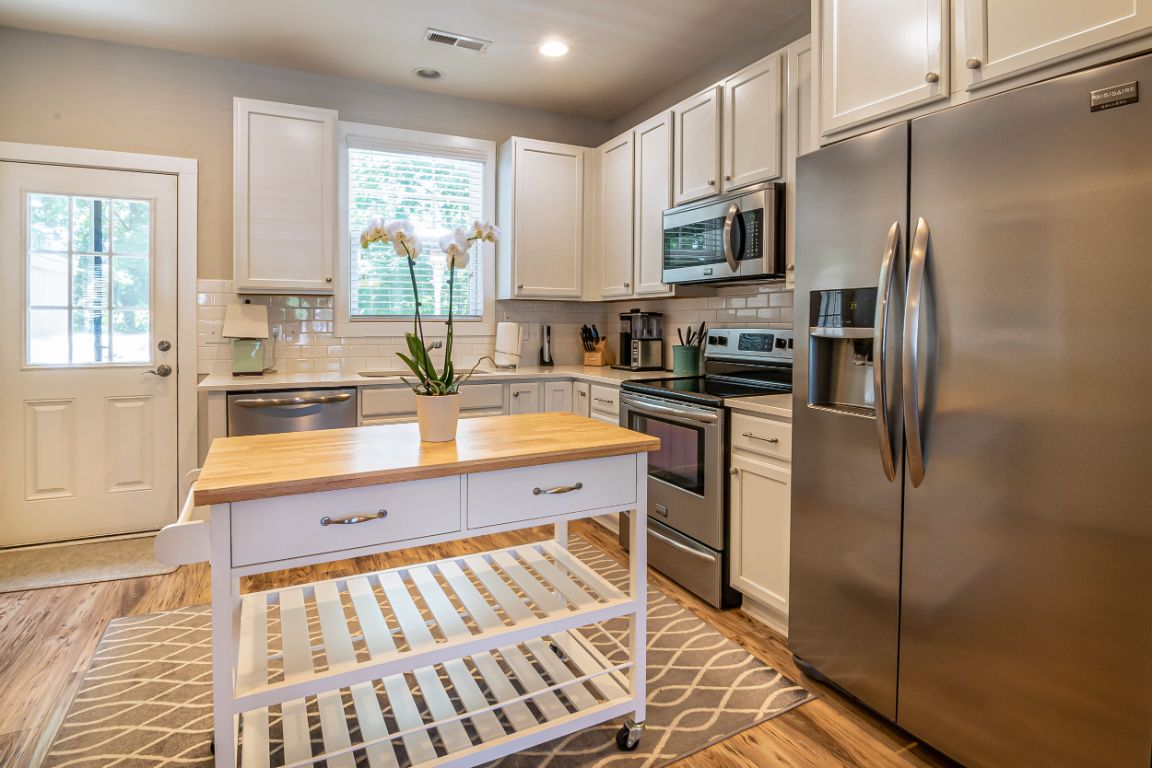
Choosing a refrigerator involves more than deciding between stainless steel and another finish. The appliance must fit the opening, pass through your home, open fully in your kitchen, provide enough useful storage, and operate within the conditions where it will be installed.
A refrigerator can look ideal online but become frustrating if its doors hit a wall, its drawers cannot open beside an island, or its shelves do not suit the food your household normally stores.
Quick answer: Measure the installation space and delivery route first. Then choose a configuration and capacity that match your storage habits. Compare the annual kWh figures on the EnergyGuide labels, review the warranty, and confirm the model’s ventilation, water, electrical, and ambient-temperature requirements before purchasing.
1. Measure the Refrigerator Opening
Start with the space where the refrigerator will be installed. Measure it yourself even when replacing an appliance that already fits.
Record:
- The width at the front, middle, and rear of the opening
- The height on the left, center, and right
- The depth from the rear wall to the front of the counter
- The depth including baseboards, trim, pipes, and electrical outlets
- The distance to nearby walls, islands, cabinets, and doorways
Kitchen openings are not always perfectly square. Measuring in several places helps reveal uneven walls, sloping floors, or cabinets that narrow toward the rear.
Do Not Guess the Ventilation Clearance
There is no single clearance measurement that applies to every refrigerator. Some models release heat around the sides, while others depend more heavily on space above, behind, or beneath the cabinet.
Check the installation guide for the exact model and add its required clearances to the appliance dimensions. A refrigerator that physically enters the opening may still be unsuitable if it cannot release heat properly.
2. Measure the Delivery Route
The refrigerator must pass through every doorway, hallway, stairwell, elevator, and turn between the delivery vehicle and the kitchen.
Measure:
- Exterior and interior door openings
- Hallway widths
- Stairway width, height, and landing space
- Elevator doors and cabin dimensions
- Tight corners and changes in floor level
Retailers may remove refrigerator doors or handles during delivery, but this should not be assumed. Ask what the delivery team is authorized to remove and whether additional charges apply.
Also confirm whether the old appliance will be disconnected, moved, hauled away, or recycled.
3. Check Door and Drawer Clearance
The published width of a refrigerator does not show how much space its doors need.
Depending on the hinge design, a door may need to swing beyond 90 degrees before a crisper drawer or internal shelf can be removed. A refrigerator placed tightly against a wall may therefore open but still be difficult to use.
Check the manufacturer’s dimensional drawing for:
- Width with the doors closed
- Depth with handles
- Depth with the doors open at 90 degrees
- Total width with the doors fully open
- Clearance required beside a wall
- Space needed to remove shelves, bins, and drawers
Make sure an open refrigerator door will not block a walkway, collide with an island, or interfere with an oven or dishwasher.
4. Choose Standard-Depth, Counter-Depth, or Built-In
Refrigerator depth affects both appearance and storage capacity.
| Type | Main Advantage | Main Trade-Off |
|---|---|---|
| Standard-depth | Usually offers more capacity for the price | May extend noticeably beyond the cabinets |
| Counter-depth | Creates a more integrated appearance | Often provides less depth and may cost more |
| Built-in | Designed for fitted kitchen installations | Higher purchase and installation cost |
“Counter-depth” does not guarantee that the refrigerator will sit completely flush with the cabinetry. Doors and handles generally remain forward so they can open properly.
Compare the full dimensional drawing with your actual cabinet depth. Readers planning a fitted kitchen can also explore our built-in refrigerator guides.
5. Choose a Refrigerator Configuration
The best configuration depends on how you use refrigerated and frozen food. No single style is ideal for every household.
Top-Freezer Refrigerator
A top-freezer refrigerator has a simple layout and is often one of the more affordable choices. It can be practical for households that use the freezer regularly and do not mind bending to reach lower refrigerator shelves.
ENERGY STAR notes that top-freezer models tend to use less energy than comparable bottom-freezer or side-by-side designs, although the annual kWh figure of each model should still be checked.
Bottom-Freezer Refrigerator
A bottom-freezer design places frequently used fresh food closer to eye level. The freezer may use a door, pull-out drawer, baskets, or a combination of compartments.
Check how far the freezer drawer extends and whether it will conflict with an island or narrow walkway.
Side-by-Side Refrigerator
Side-by-side refrigerators divide the appliance vertically, placing refrigerated food on one side and frozen food on the other.
The narrower doors can work well in kitchens with limited space in front of the refrigerator. However, wide trays, pizza boxes, and large platters may be difficult to store on narrow shelves.
French-Door Refrigerator
French-door refrigerators combine two upper refrigerator doors with a lower freezer. Their wide fresh-food compartment can accommodate large platters and broad containers.
They are often larger, more complex, and more expensive than basic top-freezer models. Compare the usable shelf layout rather than focusing only on total cubic feet.
Multi-Door and Convertible Refrigerators
Some refrigerators add a middle drawer, flexible-temperature compartment, or fourth door. These zones can be useful for drinks, snacks, deli food, or frequently accessed frozen items.
Consider whether the extra compartment solves a real storage problem. More doors, controls, seals, and moving parts can also add cost and complexity.
See our complete guide to refrigerator types for a closer comparison of the common configurations.
6. Estimate How Much Capacity You Need
Capacity recommendations based only on household size can be misleading. Two households with the same number of people may have very different storage needs.
Consider:
- How often you shop for groceries
- How frequently you cook at home
- Whether you store large pots, platters, or meal-prep containers
- How much frozen food you keep
- Whether you buy drinks or food in bulk
- Whether a separate freezer or beverage cooler is already available
Look inside your current refrigerator before shopping. Note which areas are regularly crowded, which shelves remain unused, and which items are difficult to fit.
Total capacity does not reveal how usable that space will be. Thick doors, water filters, ice makers, shallow shelves, and large internal components can reduce practical storage.
7. Evaluate the Interior Layout
Study product photos, manuals, and in-store models carefully. The shelf and drawer arrangement often affects daily satisfaction more than a long list of electronic features.
Check:
- Whether shelves can be adjusted or folded
- Whether door bins hold the containers you normally buy
- Whether tall bottles fit without removing an entire shelf
- Whether drawers open fully at the intended door angle
- Whether freezer baskets can be reached and removed easily
- How much space the ice maker and water system occupy
- Whether the shelves are easy to remove for cleaning
Bring measurements of commonly stored containers when visiting a showroom. A shelf that looks large in a promotional image may not fit your normal stockpot, pitcher, or meal-prep boxes.
8. Decide Which Features Are Worth Paying For
Extra features can improve convenience, but they can also increase the purchase price, reduce usable space, and add components that may require maintenance.
Ice Maker
An automatic ice maker is useful for households that consume ice regularly. Check production capacity, bin size, location, and whether it reduces freezer or door storage.
Water Dispenser
A dispenser may require a water connection and periodic filter replacement. Review filter availability and cost before buying.
Also determine whether the dispenser accommodates the cups, bottles, and pitchers your household uses.
Temperature-Controlled Drawer
A drawer with adjustable temperature can be useful for drinks, deli items, meat, or snacks. Confirm the available temperature range and whether the drawer can be controlled independently.
Smart Features
Connected refrigerators may offer door alerts, temperature notifications, diagnostics, inventory tools, cameras, or integration with other devices.
Consider how long the manufacturer supports the app and software, whether important features require an account or subscription, and whether the refrigerator remains fully usable without an internet connection.
Door-in-Door Compartments
A secondary access panel can make frequently used drinks and condiments easier to reach. It may also reduce conventional door-bin space or add cost that is difficult to justify for households that would rarely use it.
9. Compare Energy Use Correctly
Use the yellow EnergyGuide label to compare annual electricity use among refrigerators of a similar capacity and configuration.
The annual kWh figure is more useful than relying only on the estimated dollar cost because you can multiply it by your own electricity rate.
Estimated annual cost = annual kWh × electricity rate in dollars per kWhENERGY STAR currently says certified residential refrigerators are about 9% more efficient than models that meet the federal minimum efficiency standard. Certification is useful, but it does not automatically make a large refrigerator cheaper to run than a smaller non-certified model.
Read our guide to ENERGY STAR refrigerator ratings for a complete explanation, or use our guide to calculate the cost of running a refrigerator.
10. Check the Installation Requirements
Download the installation manual before ordering. Do not wait until the refrigerator arrives.
Confirm:
- The required electrical supply and outlet location
- Whether a dedicated circuit is recommended or required
- Water-line requirements for ice and dispensing features
- Required ventilation clearances
- Floor-leveling instructions
- Approved ambient-temperature range
- Whether additional trim, panels, or installation kits are required
Do not use extension cords or alter electrical connections to make an unsuitable installation work. A qualified installer or electrician should address electrical changes.
11. Consider the Installation Environment
A refrigerator designed for a climate-controlled kitchen may not be suitable for a garage, outdoor kitchen, basement, or commercial environment.
Ambient temperature can affect performance. A garage may become much hotter or colder than the operating range stated by the manufacturer.
For non-kitchen installations, look for a model specifically approved for the expected environment. Do not rely only on retailer labels such as “garage style” without checking the manufacturer’s specifications.
12. Review Noise Information Carefully
Noise may matter more in an open-plan home, studio apartment, office, bedroom, or quiet kitchen.
Not every manufacturer publishes a sound rating, and customer descriptions of noise are subjective. Look for repeated complaint patterns involving compressor hum, fan noise, ice production, water valves, vibration, or clicking.
Some operational sounds are normal, especially in refrigerators with variable-speed compressors and automatic defrost systems. The important issue is whether owners repeatedly describe disruptive or abnormal noise from the same model.
13. Examine the Warranty and Service Options
Do not assume that a long compressor warranty provides complete appliance coverage. Different parts may have different coverage periods, and labor may not be included for the entire term.
Review:
- The full-appliance warranty period
- Parts and labor coverage
- Sealed-system and compressor coverage
- Cosmetic exclusions
- Water-filter and ice-maker exclusions
- Whether in-home service is available in your area
- Who pays transportation or diagnostic charges
The FTC recommends reading the written warranty to understand its duration, limitations, and repair process rather than relying on brief advertising claims.
14. Research Ownership Problems, Not Just Star Ratings
A single average customer rating does not explain why owners are satisfied or dissatisfied.
Look for recurring reports involving:
- Temperature instability
- Ice-maker failures
- Leaking dispensers
- Broken shelves or drawers
- Door-alignment problems
- Excessive frost or condensation
- Parts delays
- Poor local service availability
Give more weight to repeated model-specific patterns than to isolated complaints. Also distinguish appliance problems from damage caused by delivery, incorrect installation, or unsuitable room conditions.
15. Compare the Complete Ownership Cost
The shelf price is only one part of refrigerator cost.
Include:
- Delivery and installation
- Removal of the existing appliance
- Water-line or electrical work
- Replacement water and air filters
- Annual electricity use
- Optional extended-service plans
- Likely maintenance and repair expenses
A refrigerator that costs slightly more but fits properly, uses less electricity, and has dependable local service may provide better value than the lowest-priced model.
Refrigerator Buying Checklist
- Measure the opening in several places
- Measure the complete delivery route
- Check hinge, door, drawer, wall, and island clearances
- Confirm manufacturer-required ventilation space
- Select a suitable configuration
- Evaluate usable storage rather than cubic feet alone
- Review shelf and drawer adjustability
- Decide which features you will genuinely use
- Compare annual kWh among similar models
- Check water, electrical, and ambient-temperature requirements
- Read the complete warranty
- Research repeated ownership issues
- Confirm delivery, installation, and removal costs
Once you know the size and design you need, browse the Fridge Magic refrigerator buying guides to compare more specific options.
Frequently Asked Questions
How much clearance does a refrigerator need?
The required clearance depends on the model and how it releases heat. Check the manufacturer’s installation guide for space above, behind, and beside the exact refrigerator. Do not rely on a universal measurement.
Should a refrigerator be flush with the cabinets?
Not necessarily. Standard-depth refrigerators commonly project beyond the cabinets. Counter-depth models reduce that projection, but their doors usually remain forward so the hinges can operate. Built-in refrigerators are designed for more integrated installations.
Which refrigerator style uses the least electricity?
Top-freezer models tend to use less energy than comparable bottom-freezer and side-by-side designs, but size and features also matter. Compare the annual kWh figures on EnergyGuide labels for similar models.
Is a larger refrigerator always better?
No. A larger refrigerator costs more, occupies more space, and generally uses more electricity. Choose enough practical capacity for your shopping and storage habits without paying to cool space that will remain largely unused.
Are ice makers and water dispensers worth it?
They can be worthwhile when used regularly, but they may reduce storage space, increase energy use, require filter replacements, and introduce additional components that can need repair.
Should I buy a refrigerator online without seeing it?
You can, but review the dimensional drawings, manual, shelf arrangement, warranty, delivery policy, and return conditions carefully. When possible, inspect the interior layout of the model or a closely related version in person.
Final Takeaway
The best refrigerator is not necessarily the largest model or the one with the most features. It is the model that fits your kitchen, delivery route, storage habits, installation conditions, and long-term budget.
Measure first, compare similar refrigerators, verify the annual energy use, and read the installation and warranty documents before ordering. These checks can prevent more frustration than choosing a refrigerator based primarily on appearance or a promotional discount.

 ENERGY STAR Refrigerator Ratings: How to Compare Efficient Models
Leave a Reply